


Essen und Trinken in der Stillzeit
Eine gesunde, ausgewogene und vielfältige Ernährung mit persönlichen Vorlieben und Gewohnheiten sind in der Stillzeit wichtig für Mutter und Kind.
Breast milk is the best for your child. It is optimally adapted to your child's needs and provides your child with everything it needs to grow and thrive in the first six months of life. Breast milk passes on antibodies to your child that protect the little body from infectious diseases.
Nutritional guidelines:
We recommend eating five to six small meals throughout the day - this will provide you with an even supply of energy.
As a breastfeeding mother, you need more energy (calories) than women who are not breastfeeding, but above all your need for vitamins and minerals is increased.
Fruit and vegetables
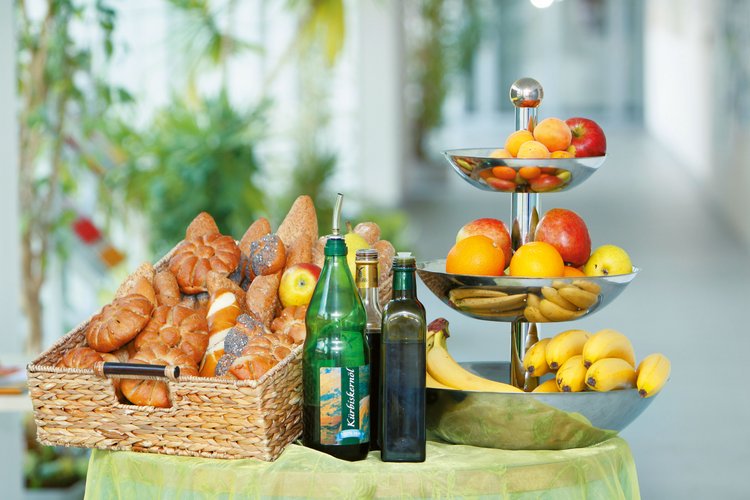
Try to eat 2 to 4 pieces (handfuls) of fruit and at least 3 portions of vegetables, salad or raw vegetables every day. This will ensure your vitamin supply. It is also a good way to cover your additional energy and nutrient requirements. Fruit is an excellent snack between meals.
Cereal products, potatoes
When it comes to rice, pasta, muesli and bread, opt for wholegrain products. In addition to vitamins and minerals, these contain plenty of fiber, which naturally helps against constipation and is very filling. Eat 5 to 7 slices of bread and a portion of side dish (rice, pasta, potatoes, spaetzle etc.) every day.
Milk and dairy products
Calcium requirements are increased during breastfeeding. With 3 dairy products a day you are sufficiently supplied with calcium. One portion of milk corresponds to 1/4 l of milk, 1/4 l of yogurt, 1/4 l of buttermilk, 3 slices of semi-hard cheese or 100 g of cream cheese. Pay attention to the fat content of dairy products!
Meat, fish, sausage and eggs
Meat provides valuable protein and iron. We recommend 2 to 3 portions of meat (120 g each) and 2 to 3 portions of sausage (50 g each) per week, whereby lean meat and low-fat sausage products (ham, sausage, etc.) are preferable. With two portions of fish (150 g each) per week you can cover your requirement of iodine and valuable omega-3 fatty acids. You can eat up to three eggs a week.
Fats and oils
High-quality oils such as rapeseed oil, walnut oil, sunflower oil, corn oil or seed oil are recommended for preparing meals and salads. Make sure you use spreadable and cooking fats sparingly!
Sweets, high-fat foods
Enjoy foods with a lot of sugar or fat such as cakes, cookies, breaded foods, chips and snacks only rarely and in small quantities.
Drinking
Drinking enough and the right kind of fluids while you are breastfeeding can promote both your well-being and that of your child. Therefore, drink regularly and at least two liters of fluid per
day. Provide a glass of water or tea with every breastfeeding meal.
Cheap drinks are: Tap water, (still) mineral water and unsweetened or only lightly sweetened fruit or herbal teas. Peppermint and sage tea are unsuitable as they reduce milk production. 100% fruit and vegetable juices are recommended in a highly diluted form - they are very high in calories on their own.
What should I avoid?
There are no foods that breastfeeding mothers should generally avoid. If your baby is sensitive to certain foods, you can always remove them from your diet.
It makes sense to avoid raw milk, raw eggs and perishable foods such as raw meat, fish and shellfish. If a breastfed child develops a sore bottom,
citrus fruits or hot spices in the mother's diet may be the cause of the soreness. Instead, eat apples, pears, bananas, nectarines, peaches, grapes etc. and season your
food with mild spices. As alcohol passes into breast milk, alcohol consumption should also be avoided while breastfeeding.
Losing weight while breastfeeding?
Particular caution is advised for all women who want to lose a few kilograms quickly after pregnancy. Losing weight too quickly can mobilize harmful substances stored in the fatty tissue
and thus pass into the breast milk. Postpone the diet until after breastfeeding! Instead, make sure you eat a healthy, balanced diet!
A healthy, balanced and varied diet with personal preferences and habits is important for mother and child during breastfeeding.