
Rückbildung im Wochenbett
nach der Geburt
The body starts to regress immediately after the birth. The weight and circumference of the uterus are significantly reduced in the first few days and weeks. The entire skin and abdominal muscles are severely overstretched. The pelvic floor is weak and needs to be strengthened in order to reduce the risk of late complications such as uterine prolapse and incontinence. The muscle fibers of the pelvic floor are severely strained during childbirth. Postnatal exercises should therefore only be started once this area has healed completely and is pain-free. This is usually six to eight weeks after the birth.
Physiotherapists at Schärding Hospital
 Silvia Zaffke
 Karin Scharinger
Tips from the physiotherapists
- Standing up or lying down on your side is easier on the pelvic floor and abdominal muscles.
- When coughing, sneezing or laughing, support the pelvic floor and turn to the side.
- Breastfeeding on your side relieves the pelvic floor.
- Interrupting the urinary stream is not pelvic floor training and should be avoided!
- You can resume your usual sporting activities once the pelvic floor has its full support function.
Lifting and carrying
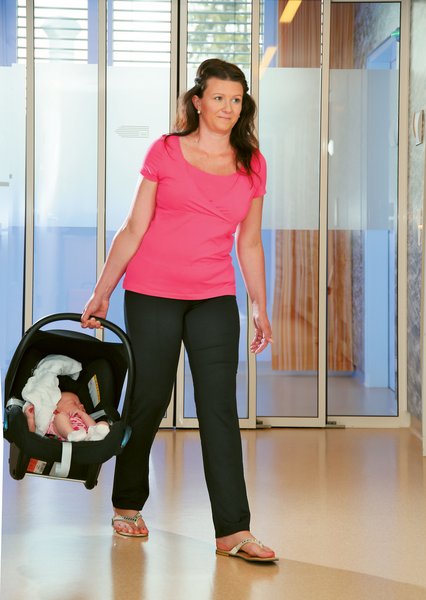
Avoid heavy lifting in the first six weeks after the birth.
Always carry loads close to your body and try to breathe out when exerting yourself.
Pelvic floor exercises
Aim:
Activation of the pelvic floor muscles, support for postnatal recovery
Execution:
Lying on your side or back. Use abdominal breathing and try to pull your pubic bone towards your navel as you exhale. To do this, gently pull your vagina and anus into yourself.
Repetition:
Five to seven repetitions, several times a day
Frequent, forceful tensing of the pelvic floor should be avoided in the first few days after the birth.
Venous pump after spontaneous delivery
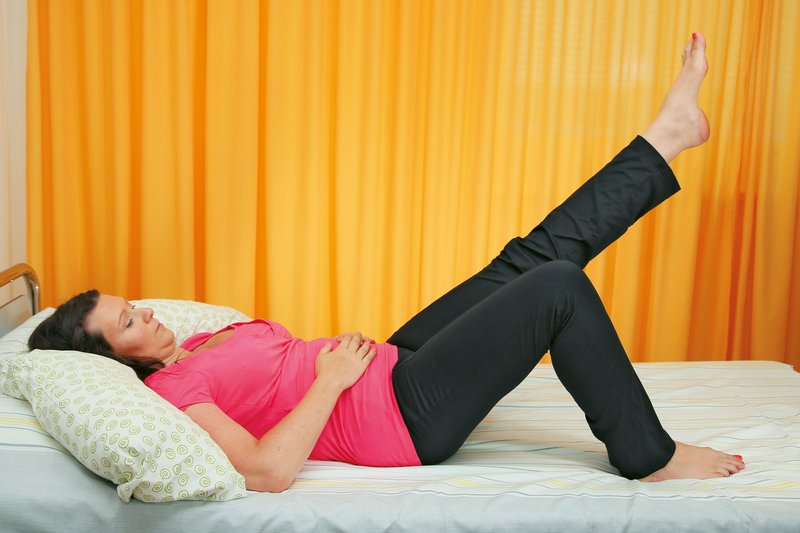
Aim:
Activation of the circulation, prevention of thrombosis, reduction of swelling
Execution:
Lie on your back and stand on both legs. Now stretch one leg into the air and move your foot up and down vigorously. Then take the other leg.
Repetition:
Three times ten repetitions per leg, several times a day
Vein pump after caesarean section
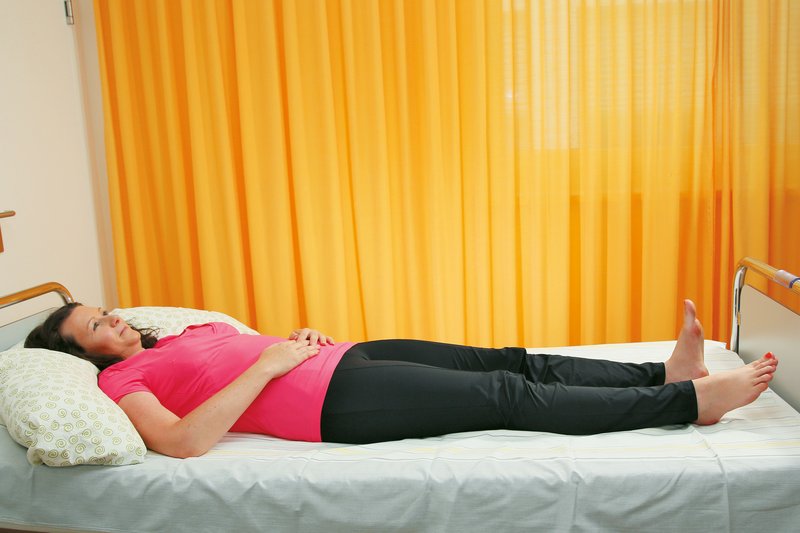
Aim:
Activation of the circulation, prevention of thrombosis, reduction of swelling
Execution:
Lie on your back and stretch out both legs. The feet are now moved alternately downwards and upwards.
Repetition:
Three times ten repetitions per leg, several times a day
Abdominal breathing
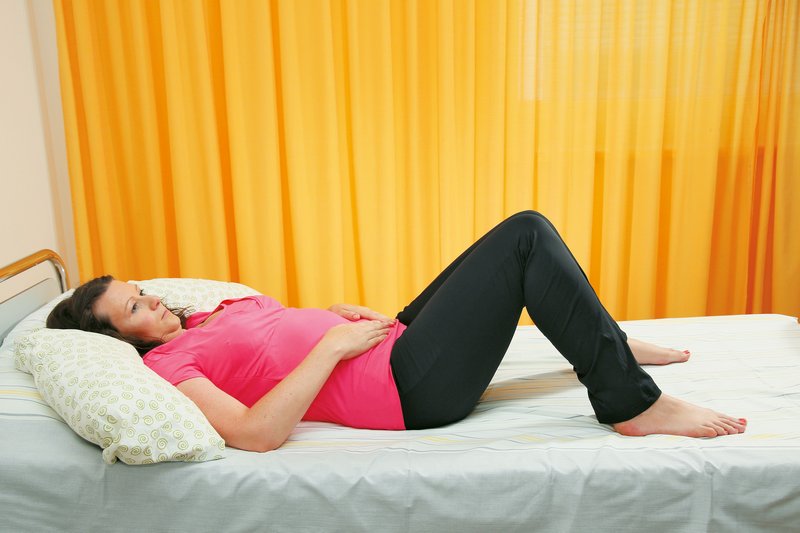
Aim:
Activation of uterine involution, bowel function and abdominal and pelvic muscles, promotion of wound healing, improvement of unpleasant flatulence
Execution:
Lie on your back and place your hands over a large area of your lower abdomen without applying pressure. Breathe in slowly and effortlessly through your nose and out through your mouth. As you exhale, imagine that you want to move your belly button towards your spine.
Repetition:
10 to 15 repetitions, two or three times a day
Abdominal muscle exercise
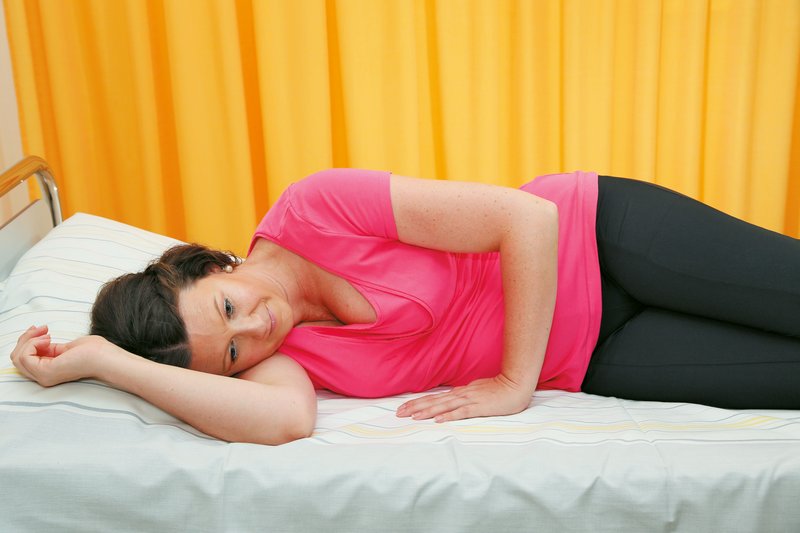
Aim:
Activation of the core and abdominal muscles
Execution:
Lie on your side with your legs bent. Place your upper hand on the mat in front of you at navel height. As you exhale, pull your navel towards your spine and press down on the mat with your hand.
Repetition:
10 to 15 repetitions in both lateral positions, two or three times a day
Prone position after spontaneous delivery
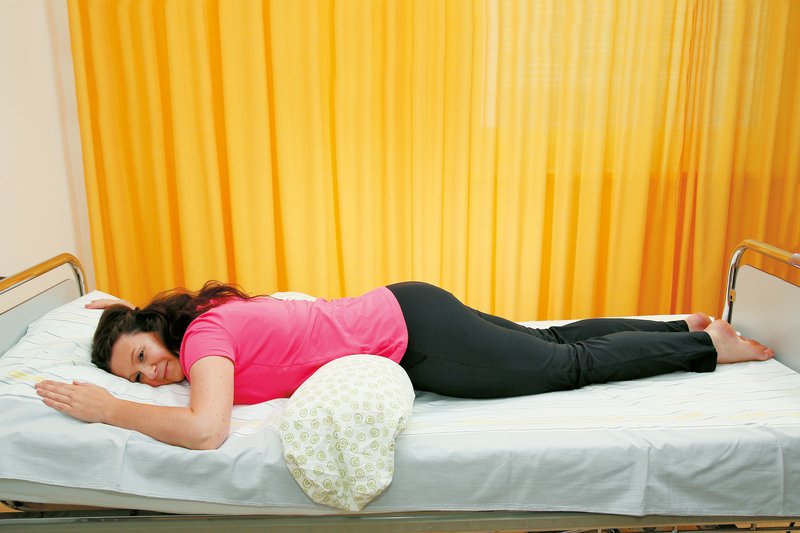
Aim:
Promotion of uterine involution, drainage of lochia, relief of afterpains.
Procedure:
Empty your bladder and lie on your stomach. Take a firm cushion and place it between your navel and pubic bone.
Repetition:
10-15 minutes, two or three times a day
Prone position after caesarean section
Aim:
Promotion of uterine involution, drainage of lochia, relief of afterpains.
Procedure:
Empty your bladder. Raise the bed up to your pubic bone and slowly tilt your upper body forward. Take a firm cushion and place it under your lower abdomen. Your knees should be slightly bent during the exercise.
Repetition:
10-15 minutes, two or three times a day
Urination and defecation
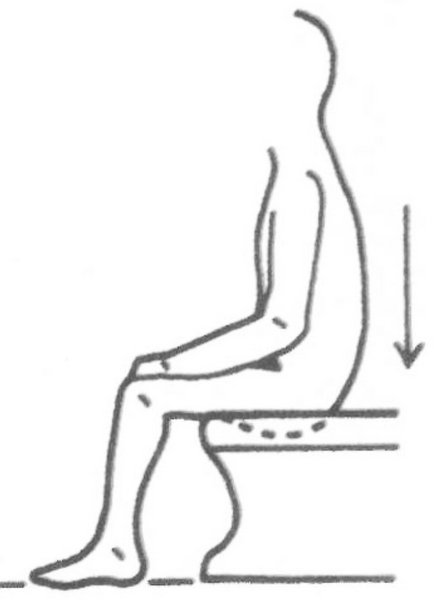
The posture when urinating:
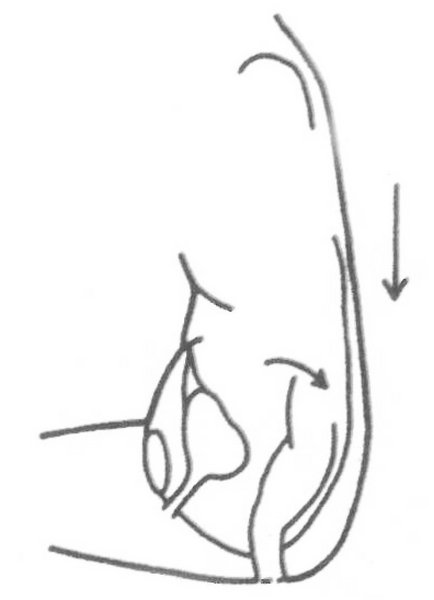
By tilting forward, the urethra is brought into a more vertical position and the bladder is pulled ventrocranially by stretching the trunk.
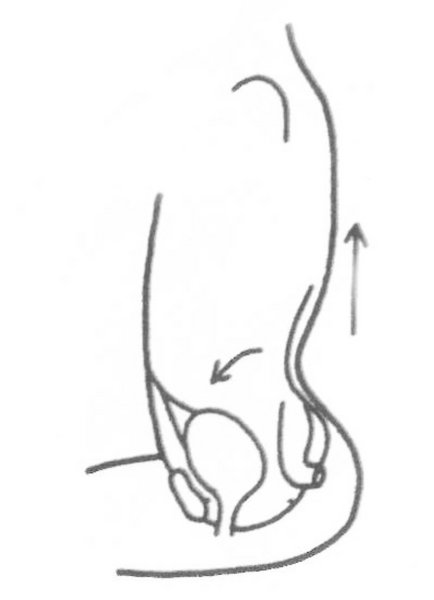
The posture during bowel movements:
By tilting the pelvis backwards, the abdominal pressure is transferred to the lowest point of the pelvis. The abdominal pressure increases due to compression of the abdominal contents. "Po into the toilet"