


Stillen - ein Lernprozess für Mutter und Kind
Breastfeeding is a learning process for mother and child. Time, rest and patience have a significant influence on breastfeeding. Children need different lengths of time to suckle at the breast. Most newborns are ready to feed at the breast for the first time soon after birth. Every "drop" of breast milk is very valuable for your child!
Benefits of breastfeeding
- Breastfeeding promotes bonding between mother and child through frequent and close physical contact.
- The baby is given security and a feeling of security.
- Breastfeeding releases the hormone oxytocin, which causes the uterus to contract. The regression of the uterus is supported.
- Breast milk contains all the nutrients the baby needs for healthy development.
- Breast milk is well tolerated and easy to digest. " Breast milk contains antibodies that protect the baby from infections.
- Breast milk does not contain any foreign proteins and thus protects the baby from allergies.
- Breast milk is always the right temperature, clean and germ-free, available at all times and free of charge.
- Breastfeeding promotes normal jaw development in the child.

How often and for how long should you breastfeed your child?
- The more often your baby sucks at the breast, the earlier the milk comes in and the more milk is produced. Your baby drinks the valuable colostrum until "milk let-down", then transitional milk until mature breast milk. Colostrum has a yellow-orange color and changes from transparent to white.
- Pay attention to the baby's breastfeeding signs, do not always wait until it cries (last breastfeeding sign).
- Alternate breastfeeding for the first few attempts (15 to 30 minutes on each breast), at least 10 minutes to stimulate milk production.
- After the milk has come in, let your baby feed on one side for at least 10-15 minutes so that it receives not only the thirst-quenching foremilk but also the filling (higher-fat) hindmilk.
- During the first few days, the baby should be breastfed between eight and twelve times in 24 hours. Longer breastfeeding breaks of five to six hours are also permissible, but the breast should still be offered from time to time.
- After one to two weeks, four to six weeks and twelve weeks, there are so-called growth phases, during which the baby needs more milk, whereby supply and demand are re-adjusted through renewed, frequent latching on. Important: You never have too little milk!
Typical signs of breastfeeding are
- Opening of the eyes
- Smacking and sucking noises
- Bringing your hand to your mouth
- Licking the lips
- Crying (is the last sign of breastfeeding)

Injection of milk
Milk usually comes in between the 2nd and 6th day. Your breasts feel warmer and firmer. The breasts have more blood flow and are filled with lymph fluid and breast milk. From the time your milk comes in, it is advisable to let your baby drink from one breast per feed until it is noticeably softer and emptier. After a few days, this feeling of tightness will subside and the breasts will become softer again. Don't worry, there will still be enough milk for your baby!
If you notice painful, reddened areas on your breasts, this may be an indication of milk stasis or incipient breast inflammation. You should now position your baby so that the baby's chin is pointing towards the reddened area and apply light finger pressure to the hard area. This will drain the breast more effectively.
If you also experience other symptoms such as fever, headache and fatigue, consult your midwife or doctor. You can breastfeed without hesitation up to a body temperature of 39 °C, but you should seek support. A milk blockage or breast inflammation is no reason to stop breastfeeding!
Breast massage
A short and gentle breast massage supports the release of breastfeeding hormones. This stimulates milk flow and milk production in the first few days. The fat content of breast milk is also increased by the massage. In the first few days of your child's life, for example, the breast should be massaged before each feeding.
Wash your hands with soap under warm running water before breastfeeding. All breast massages are gentle treatments and should therefore not be painful, even if there is a build-up of milk.
And this is how it works:
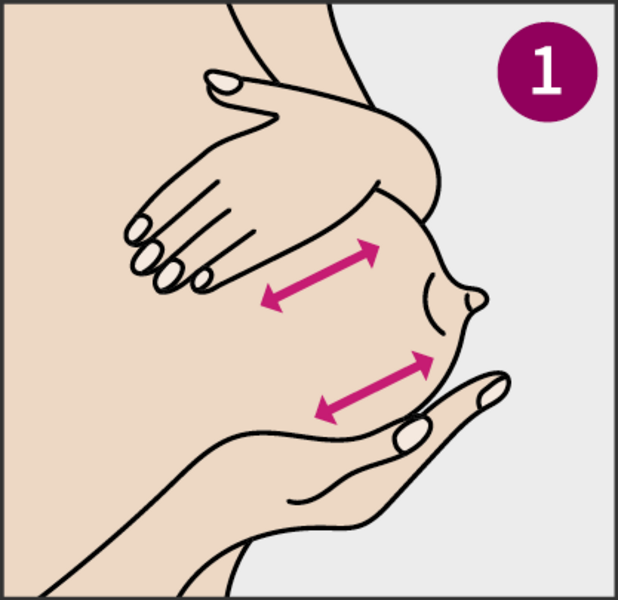
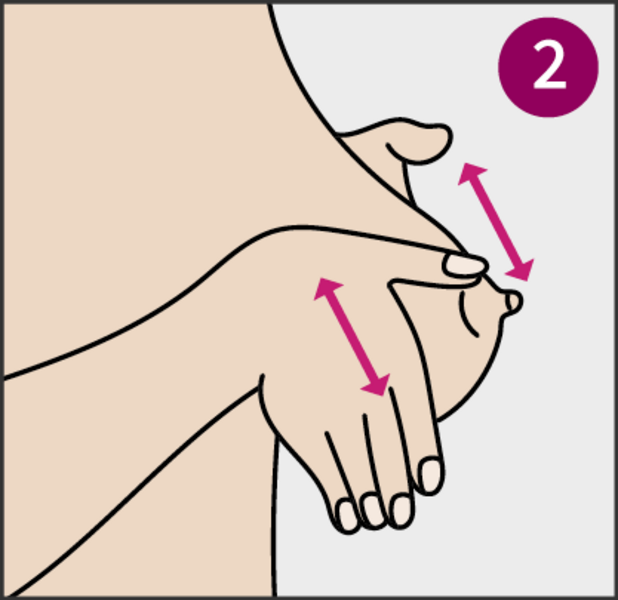
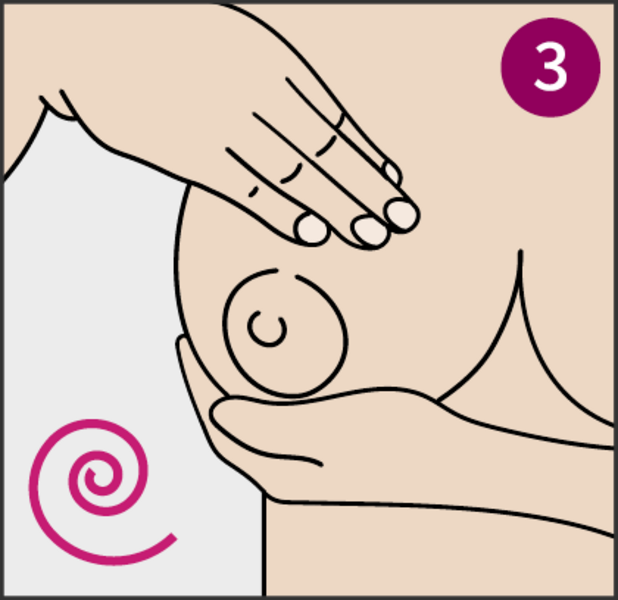
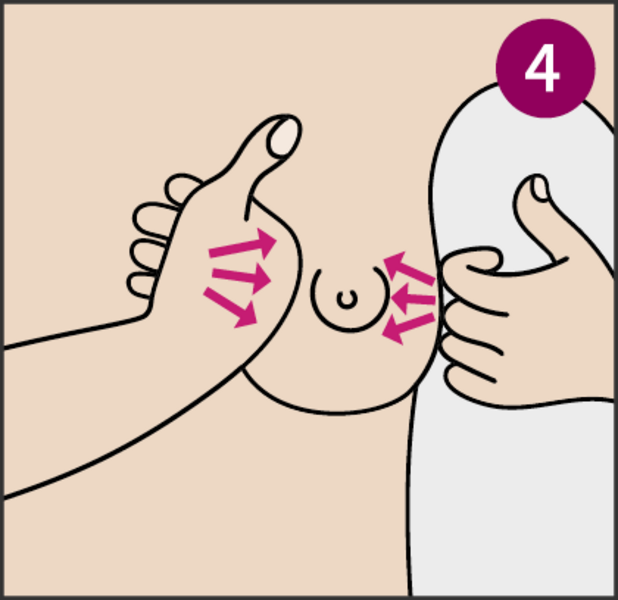
Massage according to Plata Rueda:
Take your breast between your palms and gently move the glandular tissue. First horizontally (picture 1), then vertically (picture 2).
Stimulate the milk let-down reflex (image 3 + 4):
Run your index fingers with light touches over the breast from the base of the breast to above the nipple. Stroke around the breast.
Then pluck at the nipple. Make sure your fingers are clean!
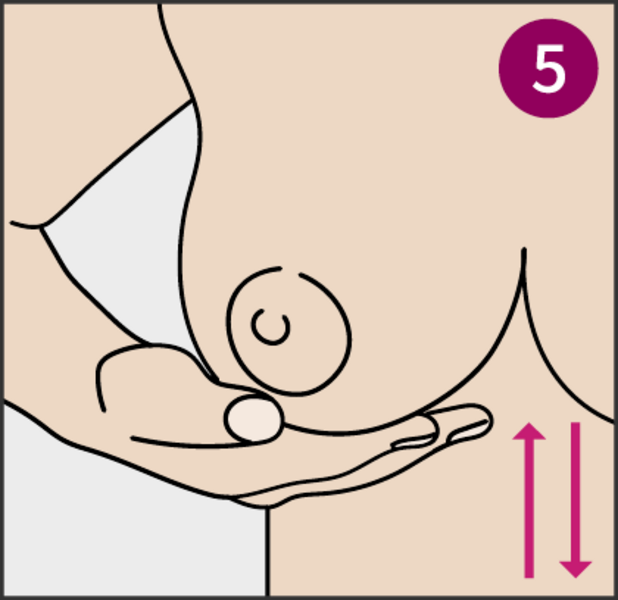
Shake the breast (image 5):
Bend the upper body forward and shake the breast so that the milk flow is supported to the front.